

Linen Management in Hotels, Healthcare and Catering
Hotels, restaurants and healthcare facilities may all need professional washing equipment, but their linen flows are different. Turnover patterns, textile types, separation procedures and staff routines all change. This guide compares three practical operating environments and helps you define the requirements before planning a laundry room.
Why does the sector change the washing process?
The choice depends on what you wash, how many times a day you run the cycles, how much space you have available, and the hygiene standards you need to meet. A hotel with sheets and towels has different needs than a restaurant washing tablecloths and aprons, just as a healthcare facility must handle textiles that require special attention to cleanliness and separation of flows. That's why it's important to start with actual usage, not just the machine's declared capacity.
A proper consultation takes into account the average laundry volume, seasonal peaks, fabric type, the need for specific programs, and the organization of the internal laundry. This way, professional industrial washing machines become efficient work tools, not just custom-made machines.
Solutions for healthcare, hospitality and industry
Industrial washing machines for different sectors: healthcare, hospitality, and industrial, must meet different priorities. In healthcare, continuity of service, hygiene, and orderly fabric management are key. In the hospitality sector, reliable cycles, adequate capacity, and consistent results on bed linens, sponges, and room textiles are essential. In the industrial sector, however, workwear, technical cloths, overalls, rags, and more durable materials may be required.
For this reason, a professional solution shouldn't be limited to the largest model or the lowest price. It should help you find the right balance between performance, durability, fuel consumption, ease of use, and service. An undersized machine slows down your work; an oversized machine can waste space and resources.
Most common applications
Industrial washing machines can be considered for many local businesses, including:
Industrial washing machines for restaurants and food businesses
Industrial restaurant washers must deal with frequent stains, intense shifts, and fabrics that need to be returned quickly. Tablecloths, napkins, dishcloths, kitchen jackets, and aprons don't all get the same level of soiling, so they require appropriate programs and a capacity consistent with the number of covers, service schedule, and any catering activity.
For a restaurant, an in-house laundry can offer greater autonomy than external pickup, especially in times of emergency, event, or sudden changes in reservations. Before choosing a machine, however, it's also worth considering drying, utility space, unloading, linen handling, and assigned staff. A high-performance washing machine works best when integrated into an organized flow.
What to consider before choosing
A good choice reduces waste, downtime, and unnecessary manual labor. Before comparing models or asking for industrial washing machine prices , gather some practical information: it will help you get a more accurate estimate that's tailored to your needs.
Recommended checklist:
This information allows us to recommend an industrial washing machine that is in line with daily work, avoiding choices based solely on nominal capacity or a superficial comparison between technical data sheets.
How should different departments be compared?
Researching " industrial washing machine prices " is often the first step, but the final cost depends on many factors: capacity, configuration, features, installation, accessories, and the level of service required. Without knowing the intended use, specifying a precise price may be of little use. Two businesses with the same number of employees may have very different washing volumes.
True value is measured over time. A washing machine suited to daily loads helps maintain regular workflows, reduces bottlenecks, and makes cycle programming easier. For those who wash every day, the difference lies not only in the purchase price, but also in operational continuity and ease of use.
Local support from selection to startup
Choosing an industrial washing machine also means planning how it will be used at your facility. A preliminary comparison helps determine whether it's worth investing in a single, larger-capacity machine, multiple units, or a phased solution. Staff also need to be able to work easily: clear programs, convenient loading, and accessible routine maintenance make a difference in their routine.
The itinerary may include:
- Analysis of your business needs and the fabrics you handle.
- Evaluation of available space and technical requirements.
- Selecting the most suitable range of professional industrial washing machines.
- Indicative budget indication based on the requested solution.
- Support for startup, proper use and day-to-day management.
This approach is useful both for those opening a new in-house laundry and for those who need to replace obsolete machines or increase production capacity.
Request a consultation for your professional laundry
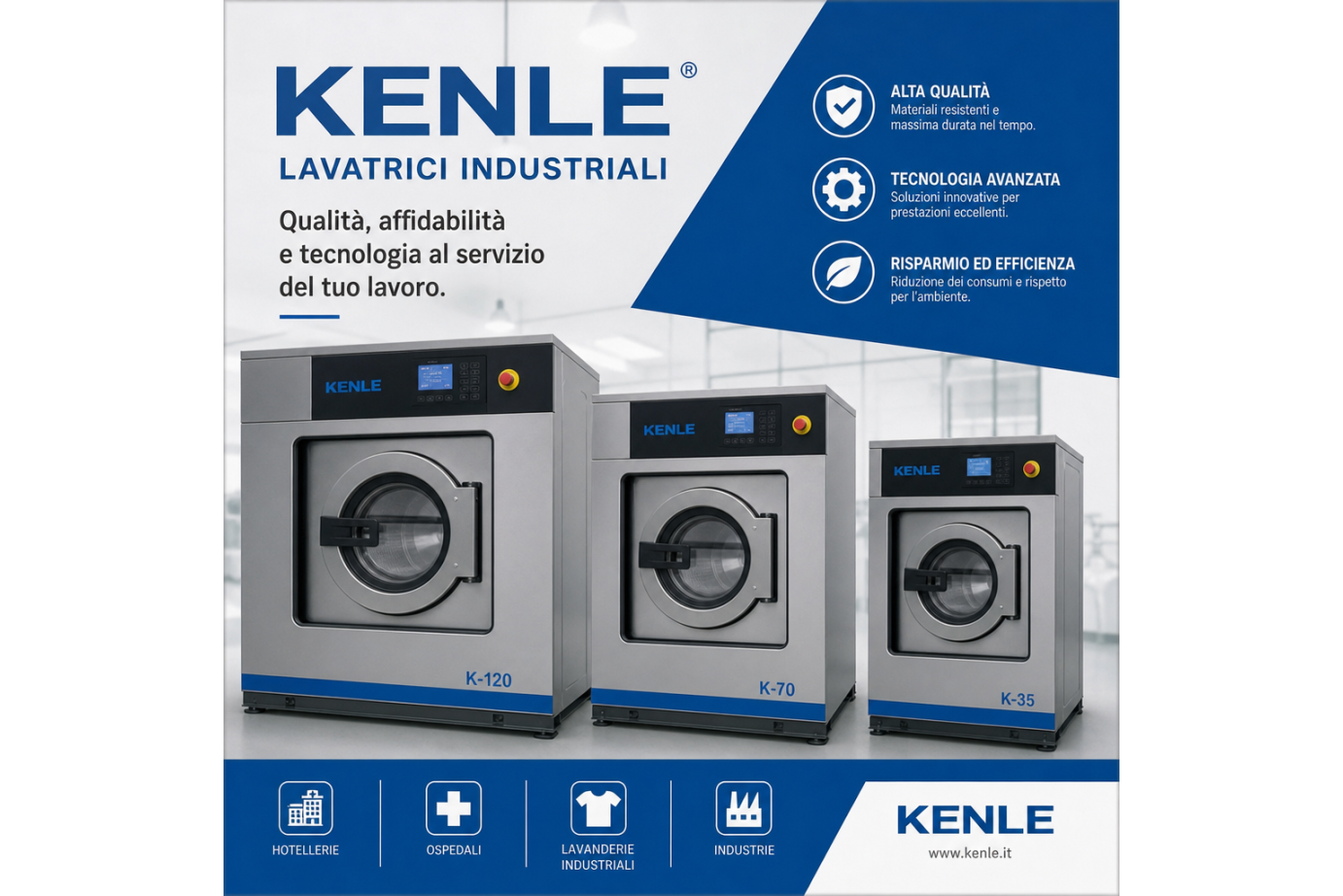
If you run a healthcare facility, hotel, restaurant, or industrial business, you can start with a simple assessment: what you wash, how much you wash, and how quickly you need to have the fabrics ready. From there, you can identify a KENLE solution that's right for your business, without having to buy an unsuitable machine.
Map the journey of textiles from collection through washing to return, taking into account applicable procedures and industry-specific requirements. The equipment configuration follows this workflow rather than a generic claim about one machine being suitable for everyone.
For the day-to-day handling of hotel towels and bed linen, explore the hotel drying-shift workflow. For an in-house laundry with separated and predictable batches, check whether 10–15 kg industrial washers match the actual quantities.