

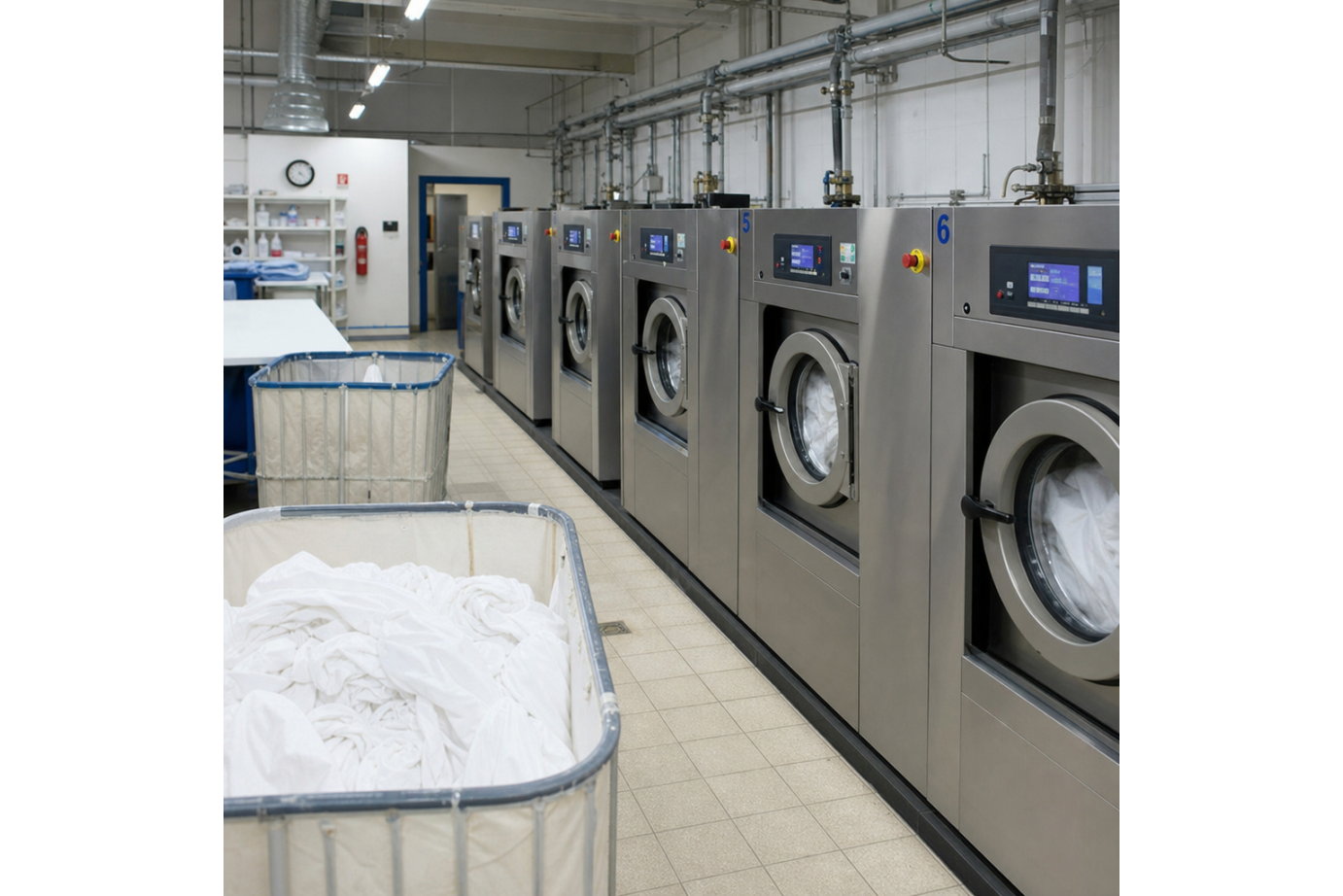
Laundry Workflow: Balancing Washing and Drying
A laundry is a sequence of steps: receiving, sorting, washing, extracting, drying and returning textiles. If one stage handles fewer loads than the previous one, queues and unnecessary handling result. Here we examine balancing equipment and tasks, which is different from simply selecting the largest available machine.
What machines do your laundry really need?
The choice depends on three main factors: quantity of garments to be processed, type of fabric, and available space. A small facility with repeated loads throughout the day will have different needs than a contract laundry or a hotel with seasonal peaks. Therefore, the starting point isn't "the most powerful machine," but rather a balanced combination of capacity, consumption, cycle times, and ease of use.
If you're looking for industrial laundry equipment, consider the entire garment journey: collection, washing, spinning, drying, finishing (if applicable), and return. An efficient washing machine coupled with a slow dryer creates bottlenecks. Conversely, a properly sized system helps you maintain predictable rates, consistent quality, and better staff organization.
Professional washing and drying solutions
Not all laundry machines are created equal. In a professional setting, structural sturdiness, program management, ease of loading and unloading, routine maintenance, and compatibility with intensive use are key. The goal is to reduce interruptions and allow operators to work with simple, repeatable procedures.
Industrial washing machines are ideal for frequent, heavy, or varied loads. They can handle cycles for flat linens, uniforms, towels, table linens, technical garments, or textiles used in healthcare, hospitality, and manufacturing facilities. The choice should be made based on capacity, available programs, spin efficiency, and ease of cleaning.
Industrial dryers and professional tumble dryers complete the cycle, directly impacting delivery times. Proper drying helps avoid residual moisture, odors, rework, and piles of laundry waiting. In practice, a good drying area streamlines the entire process, especially when loads arrive in a continuous flow.
Essential criteria to evaluate before purchasing
Before choosing a machine, gather some operational information. A realistic estimate is also more useful than choosing based solely on the initial price.
The benefits of a properly sized laundry room
A well-designed system doesn't just "wash more." It helps you work better, with less waiting time and more consistent quality. When washing and drying are balanced, staff don't have to compensate for technical limitations with longer shifts, rework, or manual management of emergencies.
Imagine a hotel that piles up sheets and towels in the morning, but has a dryer that's too small for the washing machine. The washing process continues, but loads remain in queues, and the clean linens don't arrive within the required timeframe. With adequate laundry equipment, however, the cycle is completed more orderly: scheduled loads, more predictable times, and less pressure on the service.
Practical benefits for your business
Features to request in a quote
The price of laundry equipment varies based on capacity, configuration, features, installation, and related services. Therefore, it's best to request a personalized quote rather than simply comparing a general price. A clear quote should help you understand what's included and which elements depend on your work environment.
When requesting information, prepare a simple description of your business: what you wash, how much you wash, how many hours per day you work, and what problems you want to solve. This information will help you make a more accurate choice between industrial washers, industrial dryers, and professional dryers.
In the estimate it is useful to check:
- Recommended model and capacity , with justification in relation to the estimated volume.
- Installation requirements , including space, power supplies and drains required.
- Main functions , such as programs, settings and operating modes.
- Included services , such as delivery, installation or start-up, if available.
- Conditions of assistance , maintenance and availability of after-sales support.
- Indicative times , to be confirmed based on availability and the required configuration.
Who are these machines designed for?
Industrial laundry solutions are ideal for those who handle recurring volumes and want to transform their in-house laundry into a more controlled process. They're not just for contract laundries: hotels, restaurants, sports centers, retirement homes, cleaning companies, uniformed businesses, and community facilities can also benefit.
The difference compared to a spur-of-the-moment decision lies in day-to-day management. If every day you have to decide how to make up for delays, divide suboptimal loads, or wait for drying to finish, your system is probably not aligned with the actual workload. With targeted consulting, you can identify laundry equipment suited to your business without relying on unverifiable assumptions.
Request a consultation to help you choose better
Choosing wisely means protecting your time, quality of service, and your investment. KENLE - Machinery can help you evaluate the best options, starting with specific information about your laundry and the results you want to achieve. If you want to understand how to choose laundry machinery without wasting time looking at difficult-to-compare technical specifications, the most useful step is to describe your workflow and request a personalized comparison.
A useful configuration avoids accumulation between stages while leaving space for people, service and maintenance. Before selecting equipment, draw the textile route, estimate incoming loads and compare stage capacities.
If washing finishes while trolleys are still waiting, investigate the washing-to-drying queue measurement. If washing is the bottleneck, compare the 18–30 kg industrial washer range while confirming that drying capacity can keep up.