

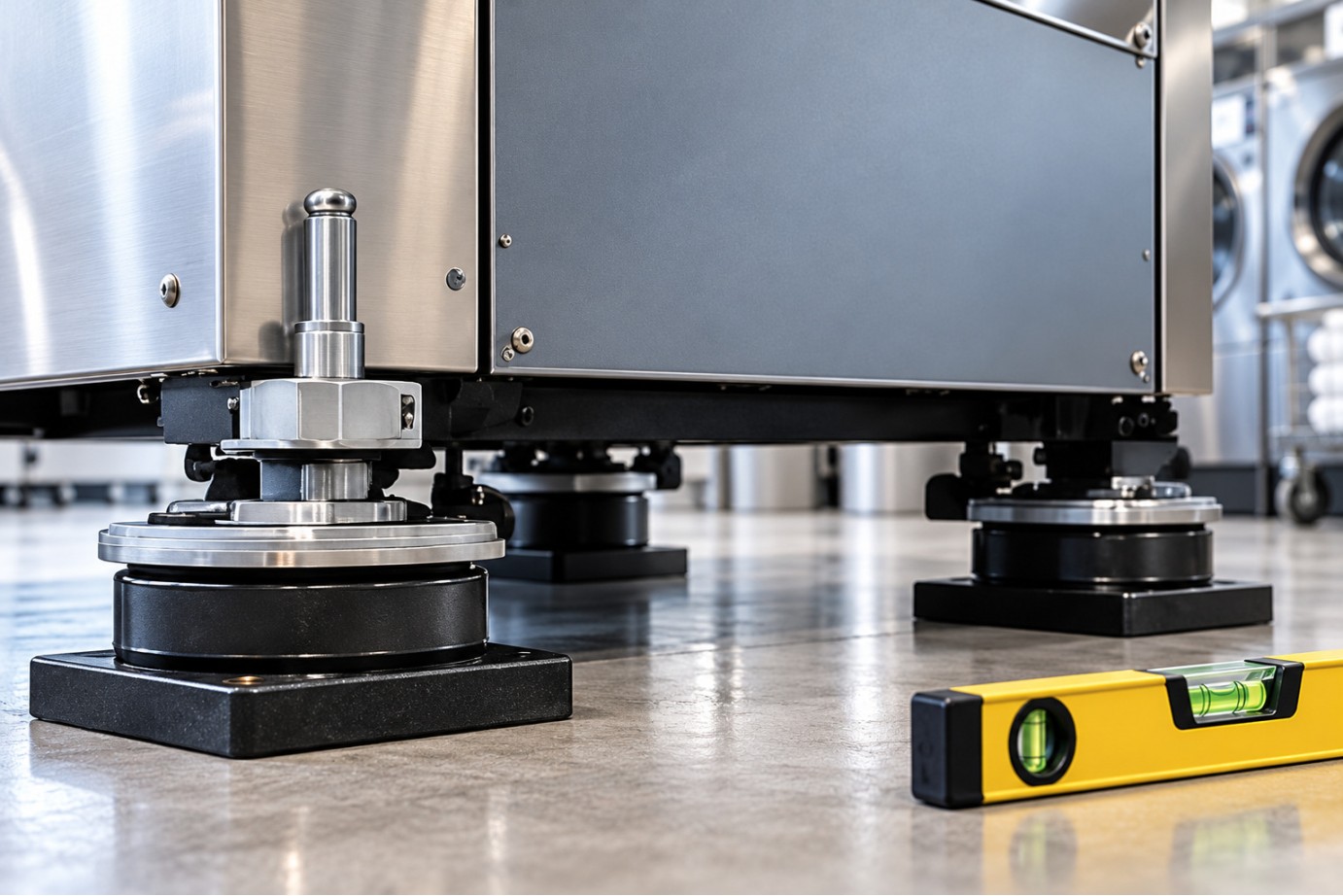
Washer Installation: Floors, Vibration and Site Preparation
The installation location deserves as much attention as the washing programme. A narrow doorway, unsuitable drain or unverified floor can become a problem before the first cycle even starts. This guide outlines questions to discuss with a technician; it is not a substitute for structural design or the manufacturer’s installation manual.
Survey the site before ordering
Measure doors, corridors, ramps and turning areas. The machine footprint is only one part of the calculation: sufficient space is needed for delivery, door opening and future service work. Record the positions of electricity, water supply and drainage, because changes made once installation starts can delay the project.
Why the support surface matters
Spinning produces dynamic forces. The machine’s behaviour depends on its design, suspension system and supporting structure. Hard-mounted machines and high-extraction suspended models should not be treated as interchangeable: each must be installed according to its own technical documentation.
Checks for qualified professionals
Ask a competent installer to assess the site and involve a structural engineer where required. Do not select foundation depth, anchor bolts or permissible vibration levels from generic internet examples. Requirements depend on the actual model, local regulations and the building’s condition.
- Floor load-bearing capacity and condition.
- Adequate route for moving the equipment.
- Access to service panels and inspection points.
- Location and capacity of drains.
- Planned electrical and water connections.
- Anchoring requirements in the manual.
Commissioning without shortcuts
Before use, confirm that installation procedures have been followed, shipping restraints have been removed where applicable, and initial checks have been performed by authorised personnel. During early cycles, record unusual noise, unexpected movement and machine warnings.
A useful decision document
Prepare a site sheet with measurements, photographs, service locations and a description of the floor. This helps the supplier evaluate compatible equipment types and identify further checks before making a proposal.
Alongside floors and utilities, assess trolley movement using the trolley handling and ergonomics guide.