

Dryer Airflow and Lint Filters: A Laundry-Room Checklist
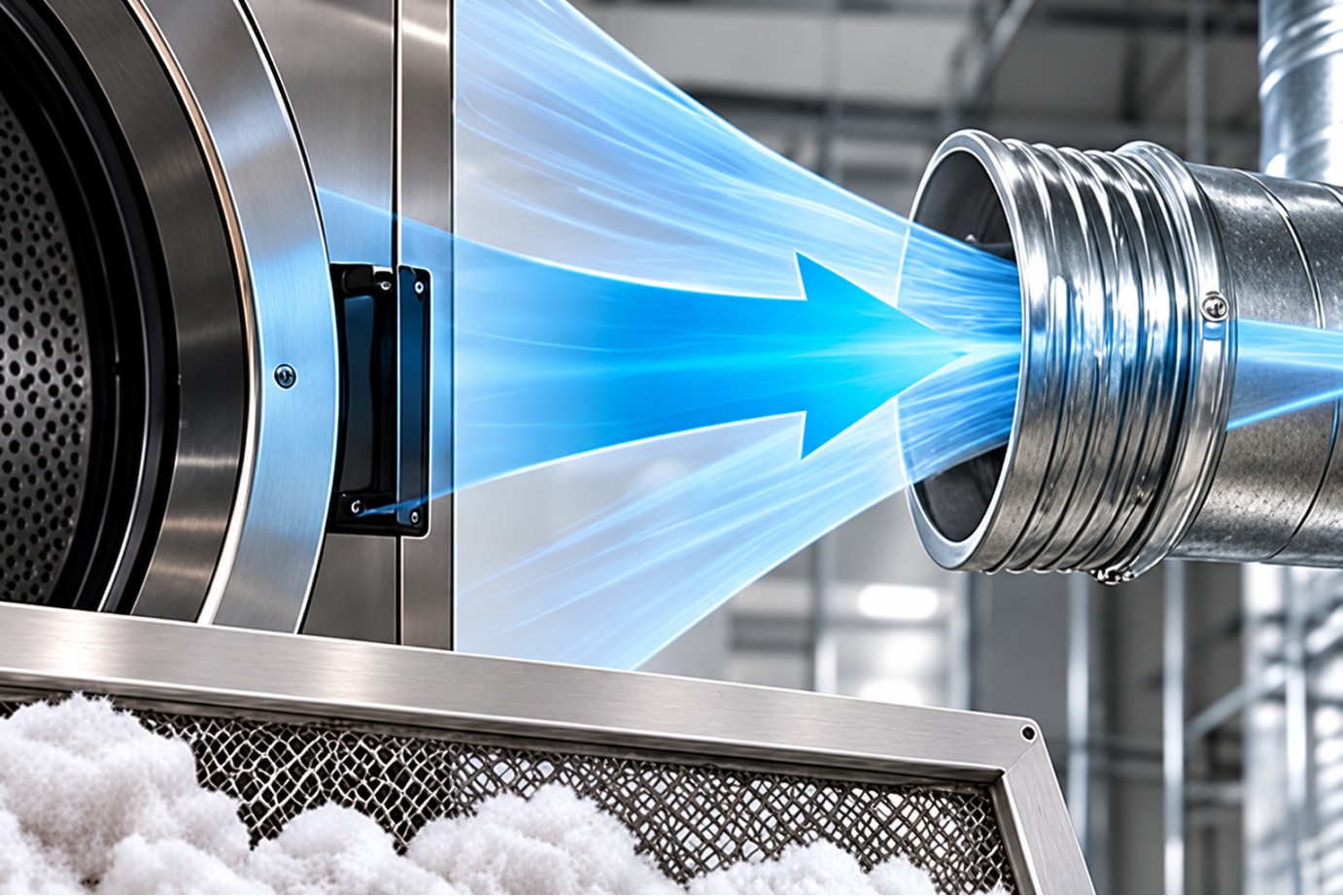
Drying depends on airflow consistent with the machine and room design. When lint filters, ducts or air inlets are not managed correctly, cycle times may become less predictable and service requirements may increase. Before changing programme settings, it helps to review the routine checks already in place.
Warning signs to record
Longer drying cycles with comparable loads, maintenance warnings, unusual lint deposits and changes in operating behaviour should be documented. No single sign identifies the cause: textile type, overload and sensor condition may also require separate investigation.
Build a lint-filter routine
Inspect and clean accessible filters according to the specific machine manual and workplace safety procedure. Never run equipment with safety devices removed or bypassed. Internal ductwork and specialist inspections should be handled by qualified technicians; surface cleaning is not the same as verifying the entire ventilation system.
Check the installation environment
Dryers require suitable supply and exhaust air arrangements. Installers must determine air intake, discharge and safety provisions for the chosen configuration, particularly where gas is involved. Universal duct diameters or airflow figures should not be copied between different models.
- Record messages shown by the control panel.
- Clean accessible components as instructed.
- Log cycle-time changes for comparable loads.
- Look for blocked external grilles.
- Schedule documented technical inspections.
Remember the previous washing stage
A load leaving extraction with more water will usually demand more drying work. To understand a slowdown, observe washing and extraction as well as the dryer itself. Separating textiles and using appropriate load sizes makes cycle comparisons more meaningful.
Prepare useful information for service
Give the technician the model, symptoms, frequency, textile type and maintenance history. This simple record supports a faster diagnosis and reduces guesswork. Technical documentation remains the principal reference for new installations or changes.
To connect room airflow with routine maintenance checks, see the dryer-filter maintenance checklist.