

Total Washer Ownership Cost: Expenses to Consider
When evaluating a laundry investment, the purchase quotation tells only part of the story. Utilities, installation, detergents, scheduled service and possible downtime contribute to the cost of operating a machine for years. This article sets out a total-cost-of-ownership approach without confusing the machine price with the full cost of the service it provides.
What belongs in a total ownership cost estimate?
The true cost of an industrial washing machine includes purchase, installation, consumption, detergents, maintenance, spare parts, and daily productivity. A seemingly affordable machine can become expensive if it consumes too much, requires frequent maintenance, or forces staff to repeat wash cycles. Conversely, a properly sized model helps reduce waste, downtime, and wear, making the investment more predictable.
When it comes to industrial washing machines: hidden costs and how to optimize your investment , the first consideration should be the workload. A hospitality facility, a self-service laundry, a retirement home, or a workshop with heavy fabrics all have different needs. That's why we propose an approach geared toward real-world use: load, cycle frequency, available space, fabric type, and required level of finish.
A range designed for continuous work and operational control
Industrial washing machines are designed to handle faster cycles than domestic machines and lightweight solutions. The right choice allows you to manage short cycles, large loads, and specific programs without compromising wash quality. The practical benefit is simple: less improvisation and more control over time, consumption, and results.
Our selection is aimed at those seeking robust, configurable machines suitable for professional use. Each option can be evaluated based on operational needs, avoiding unnecessary oversizing or models that are too small and end up working at their limits. This balance is essential to protecting your investment.
Features to consider before purchasing
The hidden costs that are often overlooked
The initial price is only part of the decision. Over time, less visible costs can add up, especially if the machine isn't suited to the type of work required. Evaluating them in advance helps you avoid hasty purchases and build a more realistic budget.
Among the most common costs to consider are installation, any system upgrades, staff training, detergents, water and energy consumption, spare parts, and service. Machine downtime also plays a role: if a washing machine stops working during peak periods, the cost isn't just technical, but operational. It can mean delays, backlogs of work, delayed deliveries, or the need for temporary solutions.
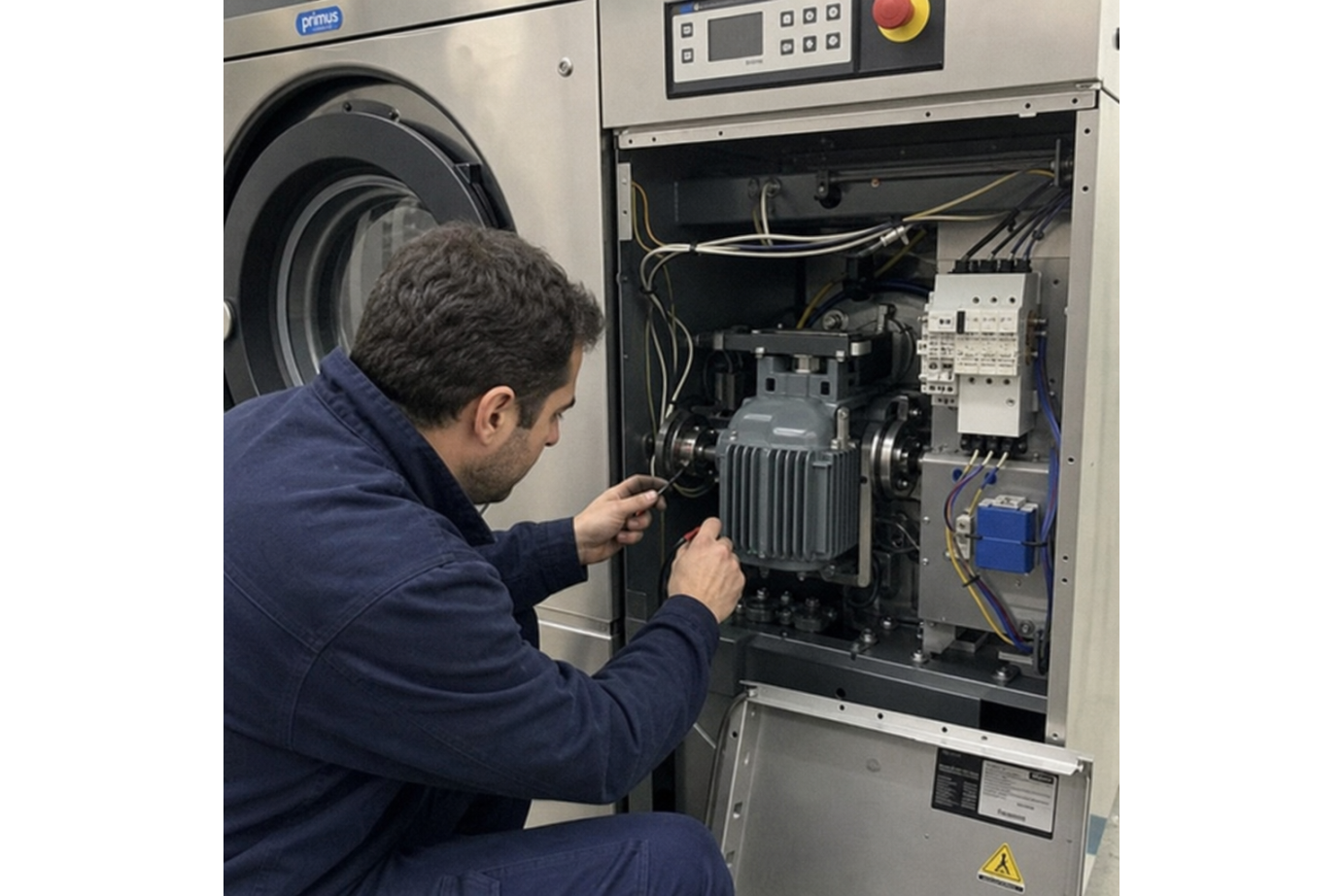
That's why maintenance shouldn't be seen as an additional expense. Proper maintenance of industrial washing machines helps maintain performance, safety, and longevity. Scheduled cleaning, periodic checks, and timely interventions reduce the risk of more costly breakdowns.
How can you compare investments at similar workloads?
Those looking for professional washing machines often find prices ranging widely. The difference depends on capacity, construction, features, control systems, materials, installation, and the level of service available. Therefore, it's not helpful to focus solely on the lowest price: it's better to compare the total cost of ownership.
A good investment starts with a concrete question: how many hours will the machine run, and how much does any inefficiency cost? If a model reduces unnecessary cycles, limits rewashing, and simplifies the operator's work, it can generate value even if the initial price is higher. Therefore, value for money should be assessed in the medium term, not just at the time of purchase.
How to optimize your budget without sacrificing quality
- Analyze actual washing volumes , distinguishing between seasonal peaks and average daily work.
- Choose the right capacity , because a machine that is too small will wear out more quickly and one that is too large may consume unnecessarily.
- Check the installation requirements before confirming your purchase to avoid unexpected costs during installation.
- Consider service and spare parts , not just the declared features of the machine.
- Schedule maintenance to prevent crashes and performance degradation.
- Train operators , because correct cycles, adequate loads and regular cleaning improve efficiency.
Ideal applications for laundries and professional businesses
An industrial washing machine is ideal when service continuity is part of the value offered to the customer or the internal organization. In a hotel, for example, linen availability directly impacts room availability. In a professional laundry, however, cycle times and reliability determine how many jobs can be handled in a day.
These solutions are suitable for different contexts:
The benefit varies depending on the environment, but the goal remains the same: to wash reliably, reducing waste and operational uncertainty.
Advice on choosing the right model
Before recommending a machine, it's helpful to understand how your business actually operates. Knowing the maximum load weight isn't enough: you also need information on the cycle frequency, type of soiling, fabrics treated, available space, and expected final results. This analysis helps guide your choice toward a well-proportioned solution.
We can help you evaluate:
The result is a clearer choice, without relying on superficial comparisons or estimates that are difficult to interpret.
Request a personalized evaluation
If you're considering a new industrial washing machine or want to replace a model that no longer meets your business needs, the best step is to start with a thorough analysis. Tell us what you wash, how often, and what problems you're trying to solve: we'll help you identify the best solution, with a transparent analysis of initial and operating costs.
Use the same observation period and comparable workload assumptions when assessing alternative configurations. This makes water, energy, maintenance and lost production costs more meaningful than a comparison of sticker prices alone.
To turn running costs into a fuller investment plan, see the commercial laundry investment plan.