

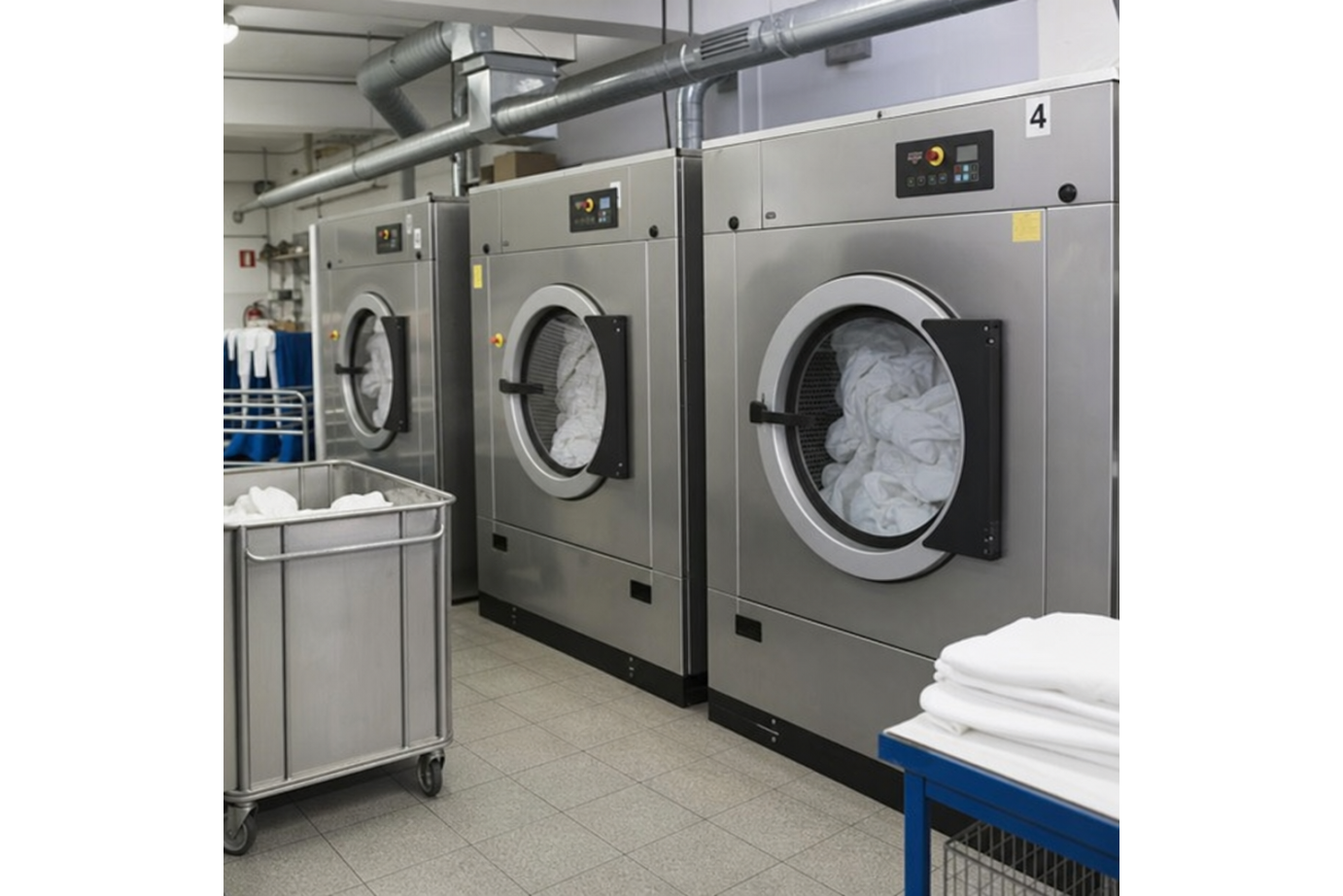
Gas, Electric or Steam Drying: How to Compare Options
The best dryer heating system depends on site utilities, daily load volume and local energy tariffs. Natural gas, LPG and electricity bring different installation considerations; optional steam heating may also be available for certain configurations. This article compares operating criteria without assuming that every heating option is offered on every model.
Which facts are needed to compare heating systems?
When comparing gas and electric industrial dryers, determining which is best depends primarily on three factors: system availability, energy costs, and intensity of daily use. Gas-fired industrial dryers are often preferred where rapid cycles and high productivity are required, while electric models may be easier to install in settings lacking a suitable gas line. Therefore, the right choice depends on a concrete analysis of the actual work, not just the price of the machine.
A business that dries heavy loads for many hours a day will have different needs than one that uses the dryer intermittently. Technical space also matters: ventilation, exhaust vents, available electrical power, and safety requirements can make one solution more cost-effective or simpler than another.
How Industrial Gas Dryers Work
Technical note: electric, natural gas/LPG or optional steam heating depends on the specific model and configuration; always verify the relevant technical datasheet.
Industrial gas dryers generate heat through combustion and distribute it throughout the drum to evaporate moisture from fabrics. They are designed for intensive cycles and to process large quantities of linens, uniforms, towels, or technical textiles. In many professional environments, they are popular because they quickly reach operating temperature and can reduce drying times when the system is sized correctly.
The main advantage of gas dryers is their rapid heating. This can translate into better load rotation throughout the day, especially in laundries with peak workloads. However, installation requires care: they must be connected to the gas mains, have adequate ventilation, exhaust gas discharge, and be inspected in compliance with applicable regulations.
Gas strengths
Gas dryers are attractive when productivity is a priority. Rapid heat availability helps manage continuous flows, reducing waits between washing, drying, and folding.
In summary, they may be suitable when:
However, these advantages must be verified on a case-by-case basis. An inadequate system can increase initial costs and make a machine that, on paper, seemed the most efficient choice less cost-effective.
The role of professional electric dryers
Electric dryers use heating elements or electric heating systems to produce hot air. They are popular in many businesses because they don't require gas and, in many cases, simplify laundry area design. For small accommodations, sports centers, or businesses with medium volumes, they can be a practical and flexible solution.
The main limitation is often related to available electrical power. A professional machine requires an adequate and stable power supply; if the electrical panel is not sized properly, technical interventions may be necessary. Furthermore, depending on tariffs and intensity of use, energy costs can significantly impact the operating budget.
When electric is a sensible choice
Electric becomes particularly attractive when installation needs to be simple, when there's no gas line, or when the business wants to avoid combustion-related work. Maintenance can also be perceived as more straightforward, although cleaning filters and ducts and regular machine checks remain essential.
It may be a good option if:
How do you compare costs at equivalent workloads?
Purchase cost is only part of the decision. Choosing between gas and electric industrial dryers requires considering installation, energy consumption, maintenance, cycle times, and the impact on work organization. A cheaper machine initially may become less cost-effective if it slows down production or requires major system upgrades.
A realistic comparison should include these elements:
- Local energy costs : gas and electricity prices vary depending on the contract, area, and consumption profile.
- Hours of daily use : the more the machine works, the more efficiency and speed matter.
- Type of fabrics treated : sponges, sheets, uniforms and technical garments have different drying times.
- Machine capacity : A drum that is too small creates bottlenecks; one that is too large may often run under load.
- Installation and upgrades : Flues, ventilation, electrical power, and utility spaces impact the budget.
- Scheduled maintenance : Clean filters, clear ducts, and regular checks maintain performance and safety.
This analysis is also useful when purchasing commercial washers and dryers together. Washing and drying performance must be balanced: if the dryer is too slow compared to the washers, the entire line loses efficiency.
Which solution is best for your business?
The most cost-effective solution is one that supports the pace of your business without generating hidden costs or operational complications. Gas-fired industrial dryers tend to be suitable for high-volume environments, where speed and continuity are key. Electric dryers are often preferable when ease of installation, flexibility, and the absence of gas infrastructure are key.
To help you get your bearings, start with a small operational checklist:
The answers help avoid making decisions based solely on habits or perceptions. An in-house hotel laundry, for example, may place great value on speed; a small facility with less intensive loads may prefer a well-sized, easy-to-use electric machine.
Efficiency, safety and durability depend on correct management
Whichever technology you choose, performance also depends on daily use. Overloading the drum, neglecting the filters, or ignoring the recommended times can increase consumption, wear, and inconsistent results. Professional dryers are built to work hard, but they require consistent procedures.
Essential good practices:
These measures improve drying quality and help protect your investment. Often, the difference isn't just in the energy source, but in how the entire laundry process is designed.
Conclusion
For a sound comparison, request the exact configuration datasheet, have a qualified technician confirm utility requirements and compare costs under similar loads. Electric, gas and steam options are not automatically interchangeable across all dryer models.
If gas heating is under consideration, prepare the site checks in the gas-dryer installation checks.