

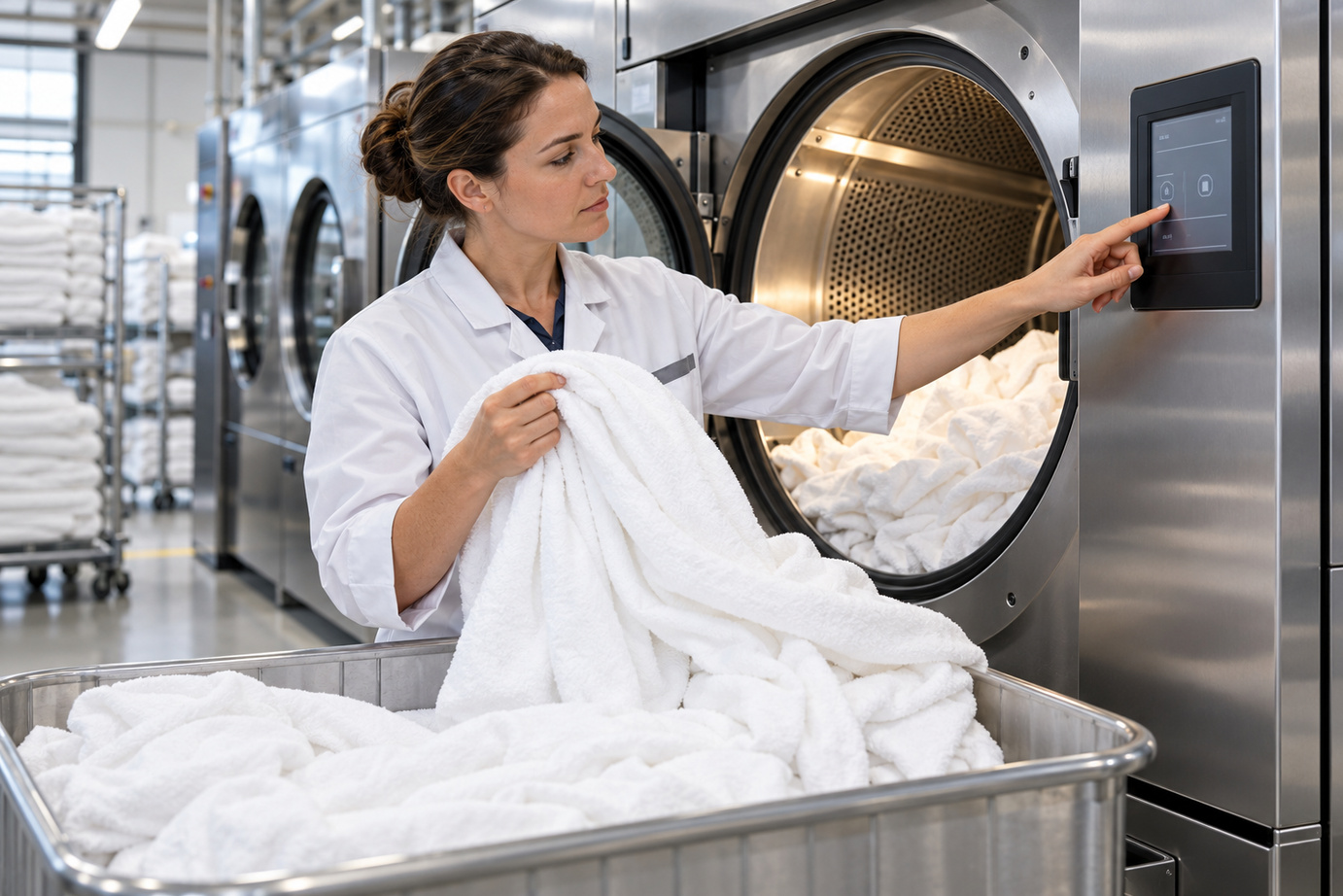
Steam-Heated Dryers: Site Information Before Planning
Steam-heated tumble drying may be worth evaluating when a laundry already operates suitable thermal infrastructure, but the presence of a steam line is not enough to establish compatibility. The project requires information about available steam, the operating limits of the particular dryer, condensate return, layout, service access and design responsibility. Machine variants differ and an 'optional steam' listing still requires technical and commercial confirmation. This guide helps managers prepare a meaningful supplier discussion; it is not an engineering design manual.
Describe the existing steam source
Collect available plant records: steam generation, distribution layout, existing connected users and availability windows. Spare capacity cannot be inferred from pipe diameter or the number of installed machines. Ask the facility engineer which verified data can be shared with the equipment designer and whether supply is constrained during production peaks. Pressure, temperature and flow verification belongs to qualified staff using approved procedures.
Condensate and return arrangements
Steam transfers heat and creates condensate, which must be handled consistently with the plant and heat-exchanger design. Do not assume a dryer may connect to an existing return header without assessment. Designers must consider circuit conditions, condensate recovery where intended, service access and ongoing maintenance. Work on hot or pressurised systems is reserved for authorised specialists; a general article cannot prescribe valve arrangements or on-site interventions.
Confirm the actual machine configuration
Request documentation for the exact model and quoted configuration rather than relying on generic category descriptions. Ask which accessories are included, which are optional and which checks remain the installer's responsibility. Drum load rating and thermal demand describe different aspects of the equipment and should not be conflated. Keep supplier responses in a shared project sheet so quotations and infrastructure assumptions can be compared consistently.
A shared project sheet for comparing quotations
Use a shared sheet with separate fields for proposed model, heating configuration, verified steam availability, plant conditions, accessories, building work, service clearances and commissioning responsibility. Mark unknown values 'to be verified' rather than entering assumed figures. Two quotations that look similar can cover very different scopes. The sheet should reveal whether a price includes only the dryer or also the necessary integration and technical checks.
Bring the laundry manager, thermal engineer and equipment supplier together to review actual processing needs. Which textile families will be handled? How many hours per day is the machine expected to run? Does the steam network also serve other departments during the same peak periods? Who is responsible when the boiler plant is unavailable? These answers affect the whole proposal. The existence of a pipe is not proof that a dryer can be connected.
Economic analysis should state its time horizon and separate capital expense, enabling works, energy, maintenance and potential plant unavailability. Without suitable meter readings and current prices, avoid claiming a guaranteed percentage advantage for steam. A methodical comparison may show one configuration is convenient in one building and unsuitable in another. The final decision requires qualified assessment of the exact quoted variant.
Compare alternatives without unsupported claims
Steam, electricity and gas differ in infrastructure needs, availability, permitting and maintenance. Economic comparisons require measured use patterns and local energy prices; no heating technology is universally cheapest. Also consider boiler-plant downtime and its effect on shifts. Where steam already exists, verify whether it is available during peak demand. Decisions should state their assumptions rather than rely on generic energy-saving slogans.
A checklist before requesting a quotation
Prepare a layout, textile mix, kilograms per shift, service clearances, thermal-plant description and responsible contacts. Ask suppliers what further verified information is required for selecting the variant. Do not attach unmeasured consumption figures to the quotation. Clarify commissioning responsibilities and warranty conditions in writing. When a key engineering datum is unavailable, postpone the detailed economic comparison rather than fill it with a guess.
Where industrial dryer selection fits
KENLE industrial tumble dryers include variants that require model-specific confirmation of heat source and load rating. The current catalogue lists heating options subject to configuration. Smaller operations may also review professional dryers, without assuming steam heating is available on every version. Selection should be a joint production and engineering decision.
Steam project documentation
| Data point | Purpose |
|---|---|
| Existing plant | verified data |
| Model variant | technical specification |
| Condensate | return-system design |
| Responsibility | commissioning |
Questions for the designer
Does an existing steam network guarantee compatibility?
No. Supply, condensate and model requirements still require verification.
Can savings be estimated without operating data?
Only as an explicitly hypothetical scenario, not a performance promise.
Before requesting a quotation, prepare an equipment schedule with the intended duty, existing utility information and the person responsible for verifying each assumption. Specify whether the steam source is shared with other processes and whether its available conditions are known during peak demand. A supplier may offer different versions of the same dryer, so written compatibility confirmation matters. Ask the designer to identify who owns the condensate return, isolation, inspection and commissioning decisions. This preparation makes quotations more comparable without pretending that blog guidance can replace plant engineering or legally required technical review.
A steam project starts with a shared specification rather than a generic price. Technical unknowns should remain visible until confirmed. This separates the commercial choice from engineering assessment and makes quotations more comparable.
To place steam heating among the other heating options, read the comparison of gas, electric and steam drying.