

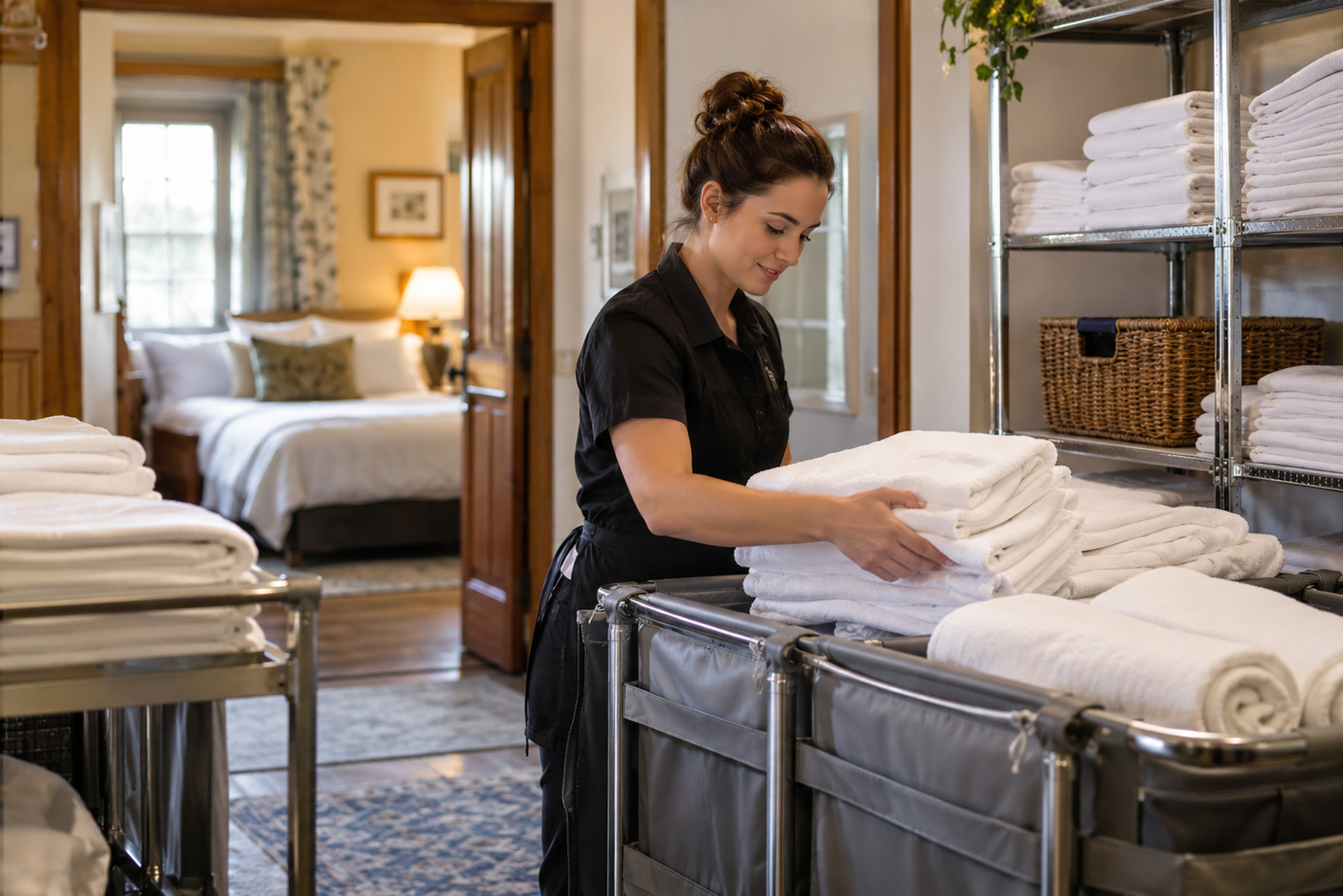
B&B Laundry: Planning Work on Checkout Days
Laundry in a bed and breakfast does not always arrive in a steady stream. Several guests may check out on the same morning while new arrivals expect ready rooms only hours later. Even a small property can underestimate the combined load of sheets, pillowcases, towels and supplementary linen. Planning should start from reservations and the actual linen required per room, not from immediately buying larger machinery. This guide sets out a practical process for concentrated check-out days.
Convert departures into actual linen items
Create a linen checklist by room category: sheets, pillowcases, towels and other items normally changed. Include extra guests, exceptional replacement and infant linen where relevant. Room count alone is insufficient because a double room and a suite can create different workloads. Weigh a representative dry sample from each category to estimate kilograms based on the property's real textiles. Update the checklist when products or service policies change.
A worked example of a busy departure morning
Entirely fictional example: eight rooms need fresh linen averaging 6 kg dry per room, giving 48 kg in total. Where the process requires two textile categories, those items cannot all be put into one batch. Estimate the resulting loads and washing, transfer and drying times before committing to internal turnaround. Replace the illustrative values with measurements from the actual property; the example only demonstrates the method.
Sequence loads around room-readiness deadlines
Do not process laundry in whatever order it arrives in the room. Prioritise items required for the earliest arriving guests while respecting sorting and care compatibility. Waiting between stages may exceed programme duration, so coordinate with housekeeping using a visible priority list. A room with a complete clean set already in storage can wait for a later batch without compromising the guest experience.
An illustrative check-out-day timetable
Imagine first departures at 9:30 and new arrivals beginning at 14:00. List the clean sets already available and those needed for that day. Do not schedule urgent internal washing where washing, drying and folding cannot reasonably finish before check-in. Inventory buffers or an alternative service should have been planned in advance. Always distinguish what is already ready from what the team hopes to produce.
A small daily sheet can show room category, number of guests, items to change, clean set allocated, readiness deadline and source batch. Keep customer and textile tracking appropriate to the service. A 'delay expected' field can trigger an internal update before a room is approached with an incomplete set. Personal guest details are unnecessary for calculating linen needs and should not be collected for that purpose.
For a B&B staffed by two people, decide who moves trolleys and who confirms the sets meet requirements. Someone switching continuously between reception, housekeeping and laundry may create more waiting than the machine cycles themselves. At day's end record which items were short and which stock remained unused. Repeated over several weeks, this allows the plan to improve without arbitrary purchasing.
Treat stock as a buffer rather than a substitute for planning
Track clean sets in storage, sets in use and articles being processed. A modest buffer helps during peaks, but excessive stock has costs and needs suitable space. Do not track only the number of sets owned; check that sets are complete, serviceable and accessible where required. If laundry is outsourced, include collection and return times in the plan.
When a backup service makes sense
If predictable peaks exceed the available processing hours, assess qualified external support or a hybrid arrangement. Compare service conditions and costs against the actual number of difficult days. Outsourcing overflow may avoid buying capacity that would sit idle most of the year. Contracts should address batch identity, textile care, quality requirements and handling of delays.
Match equipment to the property's workload
When actual figures support a stable internal workload, evaluate professional washers for usable capacity, programmes and site constraints. Consider professional dryers at the same time: a larger washer does not speed guest-room readiness when drying remains the bottleneck. Bring suppliers the peak-day kilograms and the available window between departures and arrivals.
Checkout-day planning inputs
| Data point | Purpose |
|---|---|
| Departures | forecast requirements |
| Clean sets | confirm availability |
| Processing batches | estimate completion |
| Arrivals | room priority |
Handling unexpected room turns
Can I forecast laundry by room count alone?
No. Room type, changed items and measured dry weights also matter.
Will extra stock solve every turnaround issue?
No. Stock buffers peaks but must be matched to workflow and storage space.
A small B&B can test its plan against a deliberately difficult example: several rooms leave at the same time, one set of linen requires rework and a guest asks for early arrival. Record how many clean sets are immediately available, which items must still be processed and who can change the room order. This is more useful than assigning an optimistic standard turnaround time to every day. Consider external laundry or an additional reserve only after examining real demand and delivery commitments. The aim is to keep housekeeping promises realistic without over-investing in inventory that is rarely needed.
For a B&B, appropriate equipment and linen inventory depend on measured busy days rather than generic averages. Reservations, clean sets and processing times belong in one plan. The goal is predictable work for staff and rooms ready with acceptable linen when guests arrive.
To compare B&B linen turnover with other hospitality operations, see the guide to hotel and catering linen. For a smaller accommodation business, assess the 10–15 kg industrial washer range against actual checkout-day demand.