

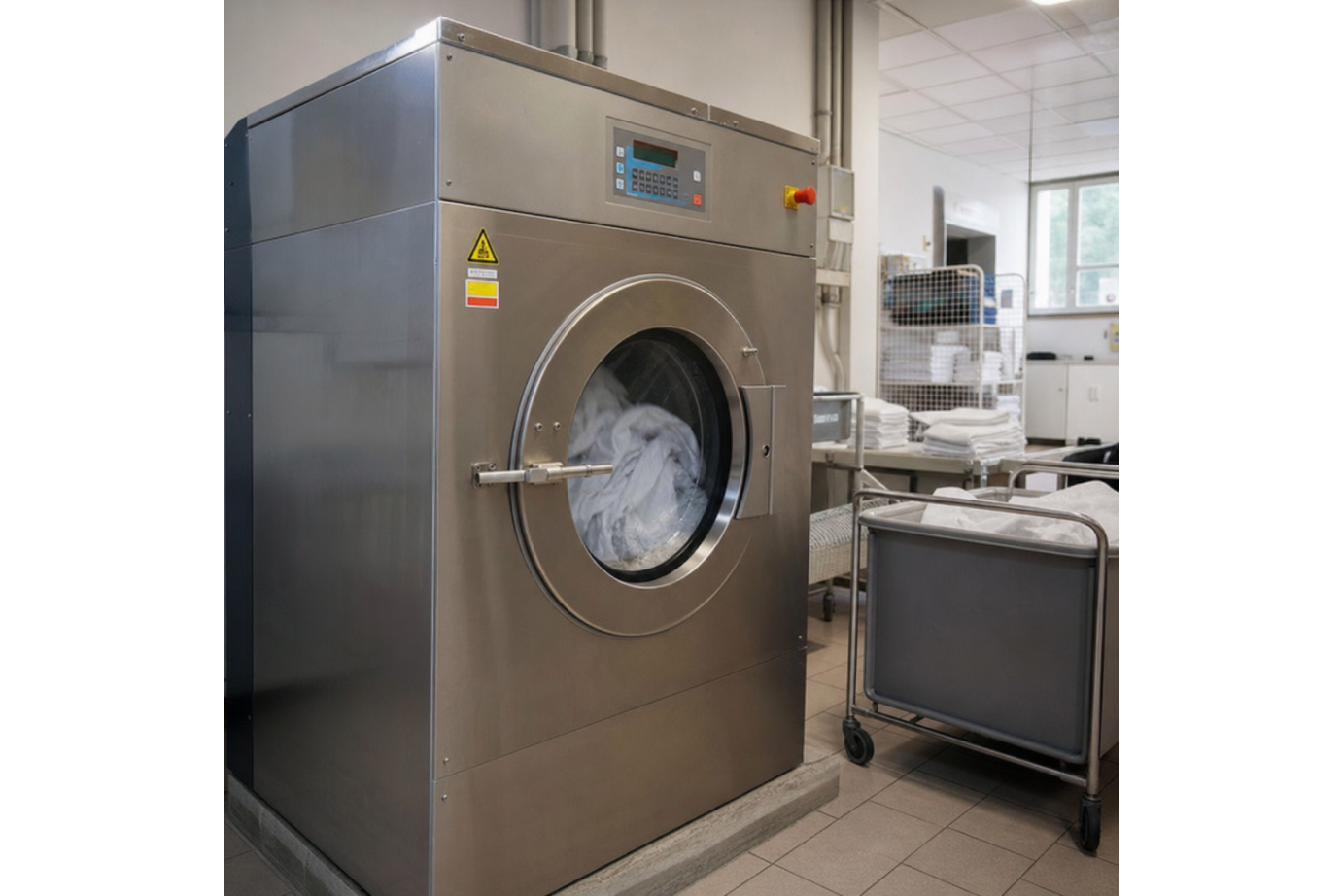
Before Buying a Laundry Washer: Practical Checklist
Before buying a machine for a commercial laundry, gather more precise information than the capacity on a brochure. Record how many loads you process, which textiles you handle and what the room and utilities can support. This is a practical due-diligence checklist, not a list of promotions: it helps you ask better questions when comparing technical specifications.
Which facts should you collect before comparing models?
The right industrial washing machine is one that can handle your daily load, meets your business's hygiene requirements, and integrates with your space, equipment, and actual working hours. A laundry will need intensive cycles and high capacity; a restaurant will primarily look for reliability, speed, and consistent results on tablecloths, aprons, and dishcloths. Before evaluating the prices of industrial washing machines, it's best to start with your specific use: how many washes you do per day, what type of fabrics you handle, and how much time you can dedicate to each cycle.
Performance designed for continuous work
Industrial washing machines are designed to handle higher volumes, more frequent cycles, and more demanding materials than home machines. The difference lies not only in drum capacity: it also depends on the sturdiness of the structure, water management, stability during the spin cycle, and the ability to set programs suitable for different fabrics. In a professional setting, a down or undersized machine slows down the entire workflow.
When evaluating a model, consider above all:
A good choice is not necessarily the largest machine, but the one that works well every day without creating bottlenecks.
Solutions for restaurants, laundries and professional businesses
Industrial restaurant washing machines must handle frequently stained fabrics, frequent washes, and tight timeframes between services. Effective programs, predictable cycles, and a design suitable for repeated use are key. A suitable machine helps keep tablecloths, napkins, aprons, and tablecloths ready when needed, reducing the risk of buildup.
Industrial washing machines for laundries, on the other hand, must handle a larger and more variable workload. Capacity, continuity, ease of management, and the ability to schedule multiple cycles throughout the day are key. If your laundry serves a variety of customers, a versatile machine allows you to process household linens, workwear, and professional textiles with greater control.
They are also suitable for:
Which costs matter beyond the initial price?
Researching "industrial washing machine prices" is often the first step, but the purchase price doesn't tell the whole story. The actual cost also depends on consumption, durability, service, spare parts availability, and the machine's suitability for the workload. A cheap but too small washing machine can force you to use more cycles, run longer, and experience greater wear and tear.
To correctly evaluate your budget, consider:
- Expected wash volume: the more constant the load, the more worthwhile it is to invest in a correctly sized machine.
- Fabric type and soiling: Heavy or heavily soiled garments require more robust performance.
- Installation costs: connections, drains, technical space and handling can impact the project.
- Estimated consumption: energy, water and detergents must be evaluated in the medium term.
- After-sales support: Quick support is essential when in-house laundry is part of the service.
Targeted consulting, like the one offered by KENLE, can help you compare options based on your business instead of choosing based solely on the initial price.
Features to check before purchasing
Before purchasing an industrial washing machine, gather some practical information about your operations. This will avoid common mistakes, such as choosing a model that doesn't fit through the door, isn't compatible with your systems, or can't handle peak workloads. An initial check also makes it easier to request a suitable quote.
Useful checklist before choosing:
If you're unsure, start with the workflow: what goes in dirty, when it needs to come out clean, and how many people will use the machine. This description is often more useful than simply asking for a "powerful model."
A safer purchase starts with a clear evaluation
An industrial washing machine should simplify work, not add complexity. Therefore, the best choice depends on a balance between operational needs, technical limitations, and financial objectives. If you work with restaurants, laundries, or businesses that cannot afford delays, reliability and proper sizing become part of the service you offer your customers.
A useful checklist ends with measurable facts: average and peak workloads, available space, utilities, textile types and service deadlines. With that information you can compare actual models without turning a buying guide into a duplicate product category.
To turn the buying checklist into a capacity decision, consult the method for calculating washing loads. After defining textile types and wash frequency, compare the 10–15 kg industrial washing-machine range rather than choosing capacity from a brochure alone.